{beginning of email}
As I
walked along with Andrew, I asked him if there were any more important people I
should meet down here in Hell.
“Don’t
get in such a hurry,” he said to me. “What part of forever do you not get?”
“Sorry,
but I was just asking.”
“Well,
here’s one now,” said Andrew.
I saw a
white man with a white beard. He sat at a table and looked into a microscope.
He was dressed in nineteenth-century garb and his microscope looked pretty old.
We approached him.
“Oh,
yes!” the man said in a weak voice. “Oh, look at that, will you!” He looked up
at us as if he actually expected us to look. So we did.
“Yuk,” I
said. “What is that?” It was a little bit of flesh in a small depression slide.
It looked like a miniature version of a chicken gizzard that got bile fluid
spilled on it by a careless butcher.
“That,
sir, is a barnacle. And it is my favorite barnacle! What’s your favorite barnacle?”
Since
the old man actually expected me to answer, I said, “Barnacle Bill.”
“I
haven’t met him,” said the man. “But this one! This barnacle shocked the living
daylights out of my fellow Victorians, and I don’t mean maybe. This is a female
barnacle—you can see the little jointed legs—but the male barnacle has
degenerated into a little parasitic lump on her side. He has degenerated so
much that there is almost nothing left of him except the penis. It sounds sort
of like my brother Erasmus. He just wanted to have fun with the women all the
time.”
“So,
sir,” I said, “Who are you?”
“I was
the first man to bring an orderly classification system to the Cirripedia—that
is, to the barnacles!” He smiled. “An evolutionary classification system,” he
added.
“Tell
him what else you did,” said Andrew.
“I also
wrote the Origin of Species,” said the quiet old man.
“You’re
Charles Darwin!” I exclaimed. “Guess I’m not surprised to see you here. You
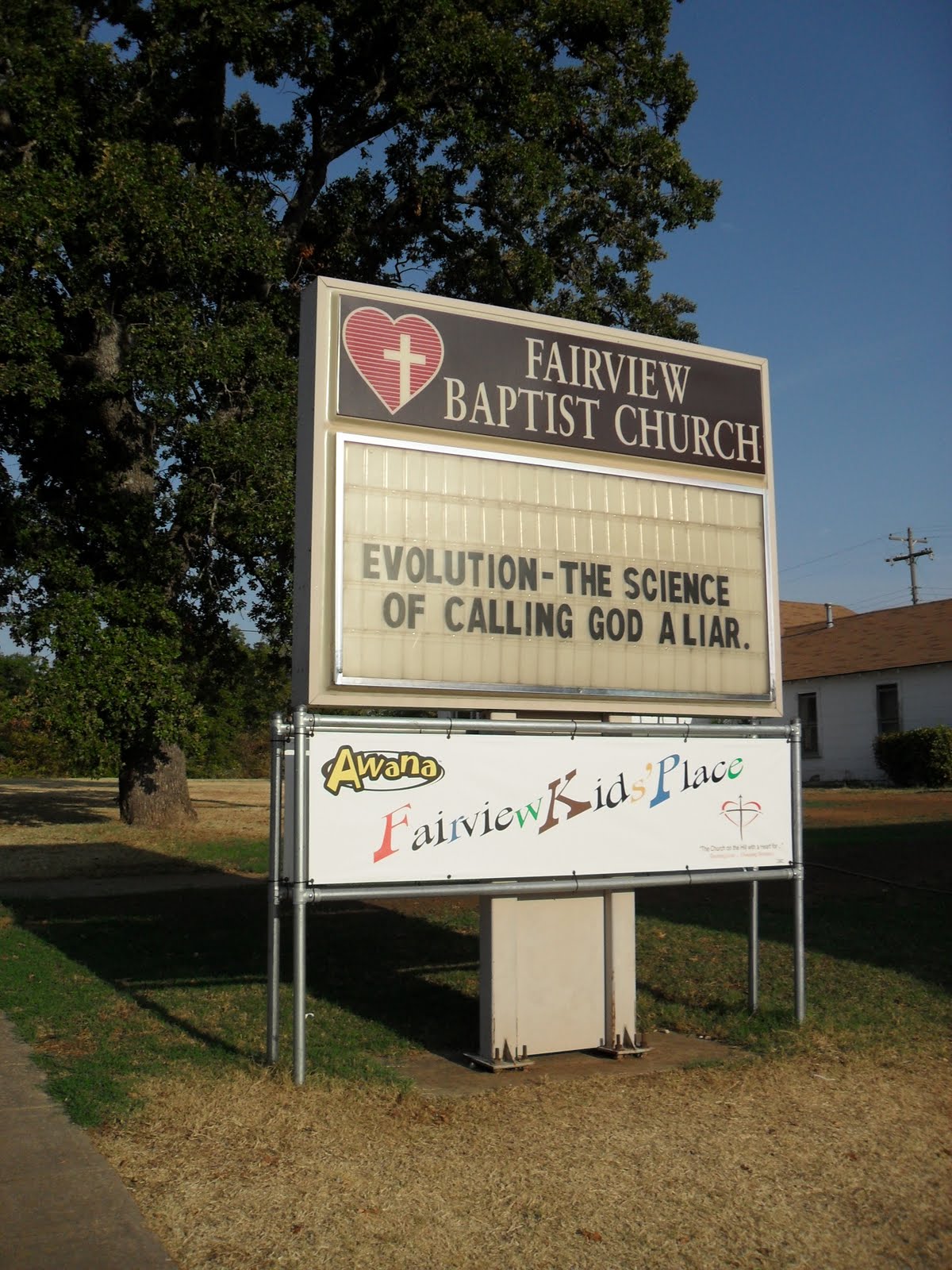
shot God right out of the sky with your theory of evolution!”
“Yes,
well,” said Darwin. “I wasn’t trying to come here. I wasn’t trying to shoot God
out of the sky. I wasn’t trying to upset anybody, particularly not my quiet and
pious wife Emma. But, man, I couldn’t help it!” He stood up from the table. “In
the Origin of Species, I explained how natural selection works. It is not my
fault that natural selection occurs everywhere, all the time, with everything,
not just organisms. Natural selection occurs even in languages, ideas, and
technology. You can’t stop it! The best organisms, ideas, and technology always
come to dominate the resource space.
“I very
much regret that this upset so many people,” Darwin continued. He said quietly,
“Especially Emma.” Then he spoke loudly, or what passed for loudly in his weak
voice. “But they were even more upset when I explained that a lot of evolution
was due not to natural selection but to sexual selection. Male birds have
colorful feathers because female birds choose them, and all that. Many of my
fellow Victorians didn’t even want to hear
the word sexual. I didn’t mean to upset them. I would much rather sit around
the mansion—and I had a pretty good one—studying orchids and pigeons.”
“And
barnacles,” I said. “The religious conservatives depicted you as some kind of
monster. But I can see you are one of the nicest, and gentlest, people I have
ever met.”
“Except
for Philomena,” said Stonewall, who had approached us, arm in arm with the
former history teacher.
“Some
people,” explained Andrew, “used Darwin’s theories to justify slavery.” He
looked into the eyes of Philomena, who had been black when she was alive.
“We used
creationism to justify slavery,” said Stonewall, who had been very very very
white.
“Well,
racists will use whatever they can, such as either creation or evolution, to
justify oppression,” said Andrew.
“And
that,” said Darwin, “is what makes me angrier than anything I ever experienced.
While I was on Earth, I was an outspoken critic of slavery. My whole family—and
Emma’s—denounced slavery, and tried our best to not invest in it. Investing in
it, while denouncing it, is miserable hypocrisy…”
“Amen,
bro,” said Stonewall.
We left
Mr. Darwin, promising to come by and talk with him some more.
{end of email}