Showing posts with label love. Show all posts

Thursday, July 23, 2026

Stars in the Daytime: Stories of Disruption, by Stan Rice, story 8. Ursa Minor

Author Stan Rice has just published another collection of short stories: Stars in the Daytime: Stories of Disruption. Stan Rice is better known as a science writer, and scientific content and themes show up in most of his stories, including those in this collection.

Here is the author’s summary from Amazon: “You cannot see stars in the daytime, but they, like hidden reality, are always there. In these nine stories, Stan Rice asks, what if God appeared in the sky, with a message for Muslims? Can a theme park haunted castle help a young woman escape from genocide? What if an old greenhouse is the site of shifting timelines? What if a hotel burglar is actually a kindly man? What if a man discovers his girlfriend thinks of him as a teddy bear, then needs him? What happens if a demon from hell changes places with a human being on Earth? In one of the stories, Ruth meets Carmen.”


The stories in this collection are: When Pigs Fly; The Haunted Castle; Bleeding Earth, The Book of Ruth, The Lord Will Provide: Two Stories of Faith (all reviewed earlier); The Old Burrill House (reviewed in my science blog (url); The Gentleman (not reviewed in my blogs); Ursa Minor (reviewed here); and You Little Demon (reviewed in the last essay in this series).

In Ursa Minor, Rice explores friendship vs. sexual love. The unnamed main character is helplessly dependent on the sexuality of his girlfriend, who acts as if she does not need him. Then he meets Ursa Minor, an old man, who is far less fortunate in love and life than he is, but seems to accept it. To the main character, Ursa is like a teddy bear (which is what ursa minor means), but then realizes that he himself is a teddy bear for the woman he adores. When she becomes terminally ill, they both realize that the teddy-bear kind of love, humble friendship, is more important than sex.


Monday, June 8, 2026

River Weeds: A Novel of Love, Lust, and Poison Ivy, part one.

How could you resist a book with a title like this?

Here is the author’s summary from the Amazon website:


“Marten, a young scientist, meets Rea, a stunningly beautiful young Cherokee woman who works at her family’s convenience store. To their mutual surprise, Marten and Rea kiss within minutes of meeting. Her bitter white stepfather, Earl, forbids her to get an education. But Marten discovers Rea’s secret place down by the river where she reads and writes. This soon becomes their love nest. Marten helps Rea get involved in his research on poison ivy. She keeps a vial of urushiol, the active ingredient in poison ivy sap. Marten and Rea get married.

“Rea knows her stepfather intends, someday, to rape her. Only someday is now. Earl removes the bolt from Rea’s bedroom door. She and her mother decide to move in with Marten right away. They go to Earl’s house when they think he is away, but he is there and tries to rape Rea. During the commotion, Rea pours the urushiol extract into Earl’s whiskey, which he drinks. Urushiol takes a couple of days to induce inflammation. When Earl later pursues Marten into the swamp, he falls in and drowns because the inflammation—from inside his throat—has closed off his breathing.

“Police investigations slowly piece the story together. The Cherokee tribal defense attorney at the preliminary hearing claims Rea acted in self-defense, but the District Attorney establishes that urushiol acts slowly—a couple of days—thus Rea’s act of keeping the urushiol in her drawer was premeditated. Despite the background of vocal tribal support, Rea goes on trial for manslaughter.”

Like other Stan Rice novels, this one has a lot of science in it, but in a fun way that most readers can understand. And it also tackles some big questions—another feature typical of Rice novels. Come to think of it, I have never seen a Stan Rice novel that you can just sit back and leave your brain off the hook. As a reader of this blog, you might like this.

Is there such a thing as True Love? Or Love At First Sight? Most scientists would say no. Among them are the offbeat, weird mathematicians Conway and Thurman, and the narrator, Marten, a botanist, all of them at Drury College in Springfield, Missouri. Conway and Thurman figure out the incredible mathematical odds against the existence of True Love. And it is a calculation that readers can understand, not just something like Spock coming up with a probability estimate as if by magic.

No such thing as True Love? At least, this is what Marten thinks until he meets Rea and instantly falls for her. And she for him. They seem as different from one another as anyone can be: he is an academic, she works at an interstate C-store. But it turns out this poor woman has an insatiable thirst for science and nature; she just has never had the opportunity to pursue it, other than secretly reading books of which her bitter white stepfather Earl disapproves. You know, evolution and all that. As quickly as she falls in love with Marten, she also realizes he might be her escape from Earl.

So the conflict and plot are set up right away. Marten loses Rea almost as soon as he meets her. How far would you go to find someone you had just begun to love a few minutes previously? And then he has to rescue her from her oppressive life.

I think the readers of this blog would enjoy a novel in which scientists are real people, and non-scientists are frequently smart too.

Saturday, May 30, 2026

The Purpose of My Fiction

For reasons I explain on my science blog, I have decided to publish my fiction on Kindle. The advantages are numerous, and they follow an ecological and evolutionary pattern: for me, my cultural evolutionary fitness would be greater on Kindle than it would be if I continued to pursue traditional routes of publication.

What I want to write about here is the purposes of my fiction. I am not writing fiction that is merely entertainment or escapism. I want my fiction to be significant in the lives of readers. On the other hand, I don’t want it to be heavily scholarly or pedantic. My fiction is, and will continue forever to be, fun and funny. Laugh and learn. This is my philosophy as a retired educator, a scientist, and now as a writer of fiction.

I want my fiction to lift people up, to help them deal with their lives by watching my characters deal with, or fail to deal with, their lives. I will also confront numerous political, social, and environmental issues, without (I hope) being preachy. Readers should feel better, and more empowered, after reading my fiction than they were before. They should also learn a lot.

To take just one example, which I have released on Kindle: the novel Meet Me in Strasbourg. One of the two protagonists is a young woman who is painfully shy and gradually breaks out of her shell. Maybe some of my readers will identify with her. She is also trapped in poverty and medical debt. This is an important issue in America, one that seldom happens in European countries. And she, and her young male partner, discover how music can express the meaning of life. There is so much fiction that degrades and discourages people; I want all of my fiction to lift them up.

I also champion the people who are less than beautiful. The young woman in this novel can hardly be described as sexy. (Most of my other novels have beautiful women in them, however.) In most of my novels, the protagonists are not socially or politically powerful, even if they are beautiful. If you feel like everyone else is more powerful or more beautiful, read one of my novels and feel encouraged and uplifted. That is what I hope to accomplish.

This novel, and all my others, also defends the concept of True Love. Love is not just an excuse for lust. It is a reality that is so strong that it can totally transform the lives of lovers. The young man pursues the young woman halfway around the world. There is so much fiction that is cynical, and it almost gets the reader to distrust everyone, to not love anyone. In my novels, readers will see that love is worth taking a chance on.

And one other thing. Modern fiction almost never takes religion seriously, whether for good or bad. Most modern fiction considers religion to be irrelevant and stupid. But in my novels—almost all of them—religious issues are vitally important. The meaning of life—yeah, I’m serious about that stuff. Usually, the powerful religious leaders have it wrong; and they are not just silly but evil. In my novels, the reader is not left in comfortable atheism, but is forced to confront religion—even if they remain atheists.

As my novels become available, I will announce them, and target readers to whom questions about love, the meaning of life, and of religion are important.

Friday, February 20, 2026

Platonic Friendships

I have been reading a book, What We Are, by Lonnie Aarssen. Aarssen is a Canadian plant ecologist, roughly contemporaneous with me. He has made the transition from plant ecologist to evolutionary psychologist—that is, studying the effects of our human evolutionary history on the way our brains work. I have made the transition from plant ecologist to a general science writer, so I know about evolutionary psychology, but do not know as much as Aarssen.

I’m not sure platonic friendship can be defined, but most of us have a general understanding of it. Aarssen makes the assertion that it is very difficult for men and women to form platonic relationships. Why? Rather than attempting a detailed summary of his reasons, I will just say that it is because men are jerks. They want to conquer women, not befriend them. That sort of captures the meaning.

I immediately recognized that this is not true of me. As I think over my life, I have had lots of platonic relationships with women. I recently made a list of people—men and women; all ages; most of them still alive—who have been important in my life, just so I could remember them. The list had 111 names, and the list keeps growing. Of these, 55 are women of a reasonably similar age with myself and with whom I had a close friendship, and with none of which I had sex. What is wrong with me?

In many cases, it would have been professionally unethical—for example, students and colleagues. But in at least 30 cases, there was no such difficulty (they were single and not, at least at the time, my students). So, I ask again, what is wrong with me?

What is wrong with me is love. In earlier decades, it was religious conviction. Later, it was that I did not want to endanger or stress my marriage. Neither of these is known, on a societal level, as a reason why a man does not have sex. But I loved all of these women, and did not want to mess up the trust they were placing in my friendship. I know for a fact that at least a few of them would have welcomed sexual intimacy from me. But a life is something you build, and as I look back on mine, I am satisfied with the choices I have made.

I knew that I was unusual, but I did not realize how unusual.

Sunday, December 12, 2021

Was Love Born in a Manger?

A church sign I saw out in the country in Oklahoma recently read, “Love Was Born in a Manger.” I will briefly explain why this is wrong.

Most of my life, devoutly Christian, I was deeply moved, almost suffocated, by my belief that Jesus represented the manifestation of God’s love to humankind. I was wrong. The stories of Jesus are wonderful—certainly, in my mind, Jesus represents some of the finest of human love—and I wish I could still believe that love was born in a manger at Christmas.

But I will now explain why this belief is wrong.

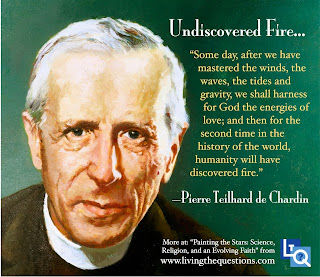
The statement implies that, without Jesus having been born, or foreordained from the beginning of Creation to be born, then there would be no love. But it is quite clear that love evolved. I do not mean  in some vague way as Pierre Teilhard de Chardin wrote about decades ago. I mean that love evolved by means of natural selection.


I am talking about altruism. Love promotes altruism which promotes fitness. Not always, but often. To love your offspring and, to a lesser extent, your relatives increases fitness through inclusive fitness. To love your friends increases fitness through direct reciprocity. To have a reputation for being kind and generous increases fitness through indirect reciprocity. Natural selection favors whatever increases our fitness. Often this is hatred, but often (perhaps even more often) it is love. Natural selection gave us the instinct of love. The evidence is that it feels so good. We need food; natural selection favored millions of years of animals who, when hungry, love the taste of food. We need water; natural selection favored millions of years of animals who, when thirsty, love water. Love is an appetite, just as much as sex, food, and water. Whether we decide to use the instinct of love or not is up to each of us individually.

There is another problem with the belief that Jesus is the origin of all love. It implies that those of us who do not accept the doctrines about Jesus (however much we may love Him) do not really love other people, the natural world, or God. We are either faking it or are totally deluded. What I experience, when I feel love for Jesus or for other people or for the creation, is not genuine, according to this view.

But I know what I am thinking. I know for a fact that I am not faking it. Billions of people who are not doctrinal Christians love people, the natural world, and God very passionately. Some are lying, but we can’t all be lying. I cannot speak for anyone else, but it would be the height of arrogance to claim that I am the only non-doctrinally-Christian person who sincerely loves other people. Many doctrinal Christians would claim that those of us who reject their doctrines might sincerely believe we are sincere, but it is in fact a delusion. I am not deluded. The burden of proof is on doctrinal Christians who claim that all who reject their doctrines are either liars or lunatics.

If, in fact, love does not exist apart from a doctrinal Jesus, then it must come from somewhere else. It must be part of human nature. And, as I wrote above, I believe that evolution put it there. Love is a basic instinct.

Merry Christmas, y’all, and though you may not think it possible, I believe Merry Christmas.

Thursday, August 12, 2021

Transition from Fundamentalism to Agnosticism, part eleven. What is love?

As I continued writing in my journal in April 2005, I left behind the swings from agony to ecstasy and back. Instead, I wondered, what is love? Part of it, whether the love of friends or sexual love, is vulnerability, dangling over the terror of loss. This is something that God cannot feel, and has to experience it vicariously through us. At least, that was what I thought in 2005.

I wrote on 18 April 2005: “Love is sharing pain yet seeing beauty—neither a major or a minor [musical] mode but dorian, with a sad heart but an upward gaze.

This was my new outline of God, which as I read it now just puzzles me, but I will pass it on in case it makes some sense to you. “’The God Who Let Go.’ First, regarding God: The Father, infinite, creator, now present only as natural law [acting]; The Son, embodied briefly on Earth, now present only in his words [speaking]; the Spirit, pervading the universe, the only manner in which God has been continually present [feeling]. In order to experience love, God must now vicariously share in our experiences.”

Monday, June 1, 2020

Saving the World—For Whom?

There are numerous ways in which I try very hard to help save the world. Many of these ways have become habits I hardly think about. What are some of these ways, and why do I do them?

I try to keep myself healthy. I eat healthy, and I exercise—no fancy diets or exercises, just healthy food and hiking. Why? It might seem obvious: I want to be healthy. But there is another reason. If I get sick, the insurance companies and, ultimately, the taxpayers will have to foot part of the bill. Insurance premiums go up for everybody, not just for me, if I get sick a lot.

I am “environmentally responsible.” I drive a fuel-efficient car, I recycle almost everything, I do not waste energy and water. Why? Very little of it is for my own personal benefit, though I admit that I really, really like my Prius and enjoy paying less for gasoline. Most of my environmentally responsible actions, however, are for the good of society and the world.

I have also been responsible during the ongoing (yes, folks, it’s ongoing) pandemic by doing what I can to prevent the transmission of the virus. The benefit should seem obvious: I am less likely to get sick. But the major reason is that I am less likely to transmit the virus, even if I do not have symptoms.

In all three cases above, the major beneficiaries of my actions are other people. Not only are they other people, but they are people I cannot choose. When animals, including humans, are good to their offspring, their own fitness is enhanced. And when animals, including humans, are good to other animals from whom they expect goodness in return (evolutionary scientists call this direct reciprocity), they can specify who the recipients are. But the three cases above are examples of, at best, indirect reciprocity: at most, the only benefit that I can receive is a good reputation. All of you out there can admire me for practicing a healthy, environmentally conscious lifestyle. But actually, this doesn’t matter a whole lot to me. While I want you all out there to like me, I will never know whether most of you do or not. I will have no opportunity to cash in on the financial and material benefits of a good reputation. Therefore, the major reason I do these things is to help other people. I’m not bragging; so, I gave away an old waffle iron to Goodwill? How hard was that? Certainly not a sacrifice. Some poor person may benefit; I will never know whether this happens, or who benefits.

The purpose of this essay is to point out that there is something different about indirect reciprocity. And that is: the altruist cannot choose the recipients.

When I reduce my medical bills, thus reducing everyone’s insurance premiums, I cannot choose whose premiums will go down. I wish the premiums of only people who try to be healthy would decrease. But even if you are a smoker who sits in front of the television, you benefit, even if only a little, from my good health. You’re welcome.

When I reduce my environmental impact, I cannot choose who will benefit. I wish that my reduction of greenhouse gas emissions, my reduction of the overall use of pesticides (by buying from a farmer’s market when possible) would benefit only my fellow environmentalists. But those of you who drive big pickups around, spewing pollutants from a huge vertical tailpipe, and throw hundreds of thousands of pieces of garbage onto Oklahoma highways (I’ve made numerical estimates of how much), and who viscerally hate environmentalists like me will also benefit. You’re welcome.

When I do my part to reduce the spread of coronavirus, I wish that the only beneficiaries were others who, like me, restrain themselves from lurid contagious activities in public. But if you are one of those people who take your guns and occupy state capitols to protest against wearing face masks, people who hate responsible citizens such as myself, you will also benefit. You are also less likely to catch the virus, because of what I and people like me are doing. You’re welcome.

Oh, by the way, don’t try occupying federal land or state capitols unless you are white. Just sayin.’ Native Americans tried it in North Dakota a couple of years ago, and many black people are rioting right now in response to the death of...I think his name was George Floyd, but so many black people get killed by cops that I can’t keep them all straight. You have heard about the big riots, but there have been many peaceful protests, such as the one this past weekend in Tulsa. This, despite the fact that the majority of white cops are good people.


People like me, who use every opportunity to act against racism, contribute to a better society. Who benefits from this better society? Even people who hate everyone except their white buddies and who show us their guns will benefit from this better society. I wish I could round up all the racists and put them on a ranch in Nevada and let them shoot each other. But this will not happen. Even though I hate it when this happens, my good actions will benefit assholes. I wish I could snap my fingers and all the assholes would get beamed up to outer space and materialized inside a nebula, where they would burst open and their blood would spew out into the galaxies. But it doesn’t work this way. Once a good deed leaves my fingers, I lost all control over it. The good deed diffuses into the Giant Karma Machine only, unlike real karma, if there is any such thing, what goes around comes around to everybody.

And the same is true of all of you good people who are reading this, since assholes don’t read anything not written or spouted by other orange assholes, whether on certain networks, or in blogs, or via Facebook and Twitter. We all have to just get used to the fact that, by the laws of nature, all our good deeds will end up benefiting, if only a little, the people who least deserve any benefit from anybody. And all of us good people can collectively say, even to those who would rather die than thank us, you’re welcome.

Friday, June 14, 2019

Trust the Mother


One of the most divisive political issues is abortion rights. I am a scientist, and I can tell you that there is no single point in embryonic or fetal development in which the unborn child “becomes human.” It depends on the indicator that you use: heartbeat, brain activity, etc. all begin at different times. There are even three events that occur during “the moment of conception.” As a result, I have no scientific opinion about “when life begins.” Nor will I speculate about morality or politics. But I do have some scientific insights that you might find useful.

Love evolved. Love is, from the evolutionary point of view, the instinct for helping and protecting other animals in your species. Natural selection has favored animals that protect their offspring. In this way, they maximize their reproductive success. If you want to know more, search for information about inclusive fitness. The most famous examples are from insects such as bees, ants, and termites, and among mammals such as ourselves.

The strongest love in the natural world is the love between a mother and her offspring. It is a force of nature. If you get between a mother bear and her cubs, it might be the last thing you do. This is because the cubs are the mother bear’s entire genetic future. Human mothers are no less motivated to protect their young, including those not yet born, than any other species of mammal.

In the animal world, a mother’s love is, on the average, stronger than a father’s love. The reason for this is because the mother always knows which offspring are hers, but the father cannot be certain. Every ounce of effort that a mother puts into nurturing and defending her young is well spent, but for the father, there is the lingering subconscious question about whether the offspring are his. (“Mommy’s baby, Daddy’s maybe.”) Genetic tests, in humans and birds, show that some of the offspring in the nest or the home, which the father supposes to be his, are not. The offspring may not be the father’s entire genetic future. Most of us fathers love our children, but on the average, mothers love their children more.

And a mother loves her offspring, including those not yet born, more than politicians do.

Given that a mother’s love is the strongest love in the natural world, I believe we should trust the instincts of an individual mother. The idea that pregnant women are eager to kill their unborn children unless white men pass laws and tell them not to is ridiculous. Maybe we should trust the mother to make the right decision regarding her unborn offspring.

Monday, April 29, 2019

Jesus for Agnostics


Religious people, especially fundamentalist Christians, believe that, in order to know God, you have to know all about him. You have to have your doctrines all figured out. To them, it is utterly impossible to know God if you do not even know whether there is a God. Furthermore, they insist that, in order to love other people, you have to have your doctrines all figured out. One can, therefore, summarize conservative Christian belief as “He who knows about God is born of God and loves.”

But the Gospel of John says exactly the opposite. It says, “He who loves is born of God and knows God.” Fundamentalist Christians have it exactly backwards, even according to their own Bible.

I love, therefore I know God (not necessarily about God). When I say I love, I mean that I care about other people, as individuals and as a world. I love God’s creation, even though I believe it was not supernaturally created; I love it because it keeps us all alive, and I love it for its own sake. Of course, I do other things besides loving. Sometimes I hate. Sometimes I lust. Sometimes I feel infatuated, although as I get older this is rare and mild. I am sometimes greedy. But these things do not negate the fact that I love. How about the rest of you? You probably do also.

One way of showing love is to encourage others. I spend a lot of time encouraging my students. I help them achieve their goals, and I also help to open their eyes to the wonders of the world and of creativity. I encourage my colleagues (usually). And I appreciate the encouragement of others.

Back in 1992, I was getting fired from a faculty position, by a process that I believed was unfair and inaccurate. It was a major disruption in my life at the time, although I am glad that I am no longer at that college. (It was a Christian college that considered Republican faith to be Christian faith.) I sought out a professor at a nearby major university. I am not sure how I chose him, but he was active in the American Association of University Professors, the professorial union. (Christian colleges generally do not have, or even allow, professors to band together for mutual benefit.) He was a busy man, in a field quite unrelated to mine. But he took the time to write a thoughtful, information-filled letter to the president of the college I was leaving, explaining that he had no personal connection to me but that he believed the process of my termination was unfair. (The college administration ignored him.)

I had forgotten all about this letter until, in the process of clearing out old boxes, I found it. This encouragement was powerfully important to me at that time. Although I had forgotten about it, it must have been one of the influences that turned me from a young professor who worried mostly about his own advancement into a mature professor who, as this man did, encourages and defends others.

By encouraging others, you can turn them into encouragers. He who loves knows God, if there is one.

Friday, January 27, 2017

To the Least of My Brethren

When I was a small child, I watched a religious documentary on television about the life of Jesus. I have forgotten most of it, but I remember the ending. The narrator quoted Jesus: “Whatsoever you do to the least of my brethren, you do so to me.” The narrator made no further comment. But the film footage that accompanied it showed drug addicts sitting in the gutters of a major city. This was in the mid-1960s, during the height of the hippie era.

I felt really challenged and uncomfortable by the ending of this documentary. If I believed Jesus, which I did, then it was my responsibility to love drug addicts sitting in the gutters. Jesus did not say that the drug addicts first had to reform, and then we could love them. To me—and I was as neat and conservative of a little kid as there could be—this sounded like giving the nod of approval to their sinful life styles. I did not like this.

I still don’t. Jesus’ words are still hard to swallow.

But the most interesting part is this. I’m pretty sure that I remember that the documentary was sponsored by the Southern Baptist Convention. I very much doubt that Southern Baptists would produce such a documentary today. The Southern Baptists have pretty much sold out to the conservative, Republican political line that drug addicts are evil and unworthy of any assistance, and that poor people are poor because they are lazy. Conservatives today despise poor people, especially those who are, in fact, responsible for their own poverty. But they did sponsor this documentary fifty years ago. In the last half century, the Southern Baptists and other conservative religious groups have left Christianity behind and become an arm of the Republican Party. It didn’t used to be this way, and it doesn’t have to be this way.


I hope conservative churches might emerge out of their Trump-worshiping phase and go back to this particular aspect of what they used to be like. I’m not holding my breath, however.

Sunday, January 10, 2016

Emails from Hell, part two

Here is the second email that I received from a soul recently arrived in Hell. The first is in the immediately previous posting.

{Beginning of email}

            In Hell, you never have to eat, since you do not have a physical body. This would also go a long ways in explaining why there is no torture in Hell: with no physical body, you have no pain receptors. I suppose that is the price to pay for not having torture: without a physical body, you can never again enjoy gustatory pleasures, like eggnog, or Guinness stout, or steak, or mushrooms, or fresh baked bread, or…don’t get me started. It also means you cannot have any sexual pleasures. I’ll try not to think about this.
            All I have left is my mind, so I have to find some way to stimulate that, I guess. Back when I was alive I was a scientist and I spent countless hours investigating the natural world and learning the mysteries of the universe. I suspect that this might be one of the reasons I ended up here. Those evangelists always told me that believing in evolution would get me sent here. I guess they were right.
            I saw another man sitting by himself, so I decided to talk with him. He looked like he was as eager for mental stimulation as I was.
            “Howdy,” I said.
            He just looked at me balefully.
            I tried again. “What’s yer name, partner?”
            “They call me John,” he mumbled.
            “That’s a new one,” I said. “Nobody else with that name, I’ll bet. John who?”
            “Just John,” he said. “We didn’t have last names back when I was on Earth. There were plenty of Johns then, too.”
            “So, which John were you?”
            “John the Apostle.”
            “You mean, the Apostle of Jesus Christ?”
            “Yes, the same.”
            “What the hell, I mean, how did you end up here?”
            “You ever read any of my stuff?” John asked me.
            “Yes, but I don’t exactly have it memorized. But, it was pretty important, wasn’t it?”
            “Yes. I wrote one of the gospels. I wrote that God so loved the world that he sent his only begotten son.”
            “You wrote that! Dang! I had fifty-three scientific papers and I edited a collection of symposium talks on the aflambulation of billiards, but I can’t hold a candle to you! You must have a citation index of about 300 trillion. I averaged about 2.58 on my works. So, God is love.”
            “Yes, I…”
            “Yeah, you wrote that too. But look around us. Doesn’t look much like God is love, you know, when you see what’s on the other side of the gulf, so to speak. And I still want to know how you ended up here.”
            “I also wrote, For God sent not His Son into the world to condemn the world but that the world through Him might be saved.”
            He paused, as if this was supposed to answer my question.
            “You don’t get it? You see, I said that God’s purpose—and remember, I thought that God was all-powerful—was to save the world. That was sort of the point, you see.”
            “But, John—not like I’m an expert or anything—but don’t you have to be good in order to be saved?”
            “I didn’t add that clause, did I? Think back over what I wrote. It’s all about God, His Son, and the saving the world. The world, as I understood it, didn’t have to do anything to earn that salvation. But, in another passage, I did say something about what was necessary. I wrote, Love one another, for love is of God; He who loves is born of God and knows God; He who does not love does not know God, for God is love.”
            “Yeah, that’s nice, John.”
            “Oh, it’s more than nice,” said John, finally becoming animated. “What it means is that everyone who loves is saved just for being someone who loves. Love entails many different things, many behavioral components. There is no way to remember all the rules, so you just remember the basic principle: love.”
            “Okay, I am no closer to understanding what you are doing down here.”
            Right then a slight-looking young man came over and sat down beside us.”
            “Hi, John,” said the young man.
            “Hi, Mickey,” said John. Then he explained to me, “Mickey died of AIDS back in 1989. He was gay. He couldn’t help it. He spent his whole life showing love to people. Not by being gay, but just by being a really nice guy. Now, according to my rule, he should have been admitted into Heaven. But the forces that be were not about to allow the spirits of dead gay men or lesbians enter Heaven! So, of course, Mickey didn’t make it. Now, do you understand? That means I didn’t make it either, since I was the one who published the rule that would have allowed people like Mickey to get in. So that means that I had to go to Hell, too.”
            “But, you were an Apostle!” I nearly screamed. “Surely Jesus…”
            “Jesus doesn’t have much of a say in it,” muttered John. “No, it’s the Republican Party who gets to decide who goes to Heaven and who does not. Them, and the Jihadists. Now, if Jesus had anything to say about it…” He sighed. “But that’s expecting too much.”
            “And so we miss out on the pleasures of Heaven?” I asked.
            John gave me a wry smile. “I want to show you something.”
            He stood up and led me up a stairway. Mickey followed last. Up at the top was a telescope. Not one of those big suckers like on Palomar, but, well, it looked like the one Galileo used.
            John said, “With this telescope, we can see into Heaven. Please, take a look.”
            I saw Heaven opened, just like John wrote in the Book of Revelation. But that is the next email.

{End of email}


Thursday, April 23, 2015

Our Shared Environment

I am sure I have written about this idea previously: What we do to the environment of the Earth, locally or globally, is directly involved with how we relate to other people. How can we say we love our human brothers and sisters if we pollute the environment we share with them? Love your neighbor—and it is your neighbor’s Earth.

A particularly amazing example of the disregard that some people have for their neighbors, and their neighbors’ environment, has come to my attention in rural Oklahoma, where I live. When I first heard about it, I could hardly believe it, until it was corroborated by a second person. I still find it hard to believe, but I will pass the story on to you.

One way that some rural residents of Oklahoma have of getting rid of their garbage is to put it in the flatbed of a pickup truck and drive around until the wind blows it away. This does not work for heavy objects like beer bottles—those are more efficiently disposed of by throwing them out the window—but it works very well for paper and plastic. There are two reasons for this. First, Oklahoma has a lot of wind. Second, the air pressure is greater down in the pickup bed than in the moving air (moving, that is, relative to the pickup bed) above the pickup bed, virtually guaranteeing that the light garbage will be lifted out and blown away.

People who do this sort of thing might as well have a bumper sticker on the truck proclaiming, “This is what I think of you, you worthless miserable fellow Americans—I will dump my garbage on you.” Of course, they do not want to actually say this, so they pretend that, oh-oh, the wind just happened to lift the garbage out of my truck, oh well. Maybe they are even salving their own consciences by pretending that they are not really dumping their garbage when they do this.


As I said, I would not have believed this story had it not been told to me by two people who do not know one another or live in the same town.

Friday, April 3, 2015

Good Friday Message: What Kind of a God Would You Be?

I guess I wouldn’t make a very effective God. The real God, if there is one, makes certain that the laws of nature ruthlessly afflict anyone who happens to have bad luck, for example inheriting certain bad mutations, or happens to get a contagious disease. Would you be able to do this? I couldn’t do this. I would be unable to resist helping those who suffer and who beg for help. I would not be able to be as cruel as religious people think God is. I just couldn’t do it. I would be too much of a bleeding heart. You probably would be too.

That is, I would be more like Jesus and less like God.

I understand the argument that God lets people suffer because God expects other humans to come to the rescue. But this argument has many exceptions. What about the situations where nobody is available to help? What about the situations when there is no way to help? In these cases, only God can help, and he does not.

Oh, and of course, a competent God would have to send to Hell anyone who got their doctrine wrong.


Oh well. You can’t have a bleeding-heart God running the world, I guess.

Friday, December 19, 2014

There Must Be Something?

The following is probably the closest I am going to come to a Christmas message.

As a Christian agnostic, I remain uncertain about the existence of God, primarily because God cannot be defined. If you think that God is a universal ruler who is in control of everything, then the senseless evil of the world disproves your image of God.

The argument is often made that if there is no God, then there is no universal good or evil. Morality is then defined by the species. There is no basis for saying that the fictitious Klingons, who glorify violence, are bad, and humans are good. One cannot say that spiders are evil simply because the only way they can survive is by sucking the life out of other creatures.

While I grant that this may be true of spiders, I do not believe it is true of intelligent creatures. If spiders evolved intelligence, then at some point they should realize the truth that they should love their fellow creatures. I cannot prove this, but that is how I feel. This may seem to be a wholly imaginary topic—after all, humans evolved as altruistic animals, so for us, love is good and hatred is evil. Why wonder about other potential intelligent beings in the universe?

I confess that I believe there is some universal goodness. Not necessarily a person to be called God, but a pervasive Goodness against which evil can be measured. Even if there is no God who does anything, says anything, or thinks anything, goodness is not merely an adaptation that some species have and others do not. If love is God, then I believe in a universal God.


This is not so different from something that is actually in the Bible. The first epistle of John says that God is love. It does not say that love is God, but for me to say it is not such a stretch from what the Bible actually does say.

Thursday, August 30, 2012

The Republican Party Is Going To Stop Loving Us


For many years, we have all known that the Republican Party is the party of love. They say only nice things about people so that everyone will love them. They gladly accept the label “bleeding hearts” for themselves because their hearts flow out with love toward not just the middle class and poor, such as the victims of bank robo-signing, but even toward the world of nature, you know, birds and stuff. They embrace the Bleeding Heart ideal because this term refers to the bleeding heart of Jesus Christ.

Nowhere has Republican love been more obvious than in the pronouncements of commentators such as Rush Limbaugh, Sean Hannity, and Bill O’Reilly. For years, liberal writers such as myself have referred to them as “bloviators,” but we have been so wrong. Every word that has come from Rush Limbaugh’s mouth has been loving and nourishing, each an attempt to help his listeners by giving them truly constructive advice. Even Jesus himself would have a hard time matching the love that Republicans have showered upon their listeners. Where have you ever seen a more loving person than Donald Trump? When the Religious Right Republican commentators make it abundantly clear that everyone who disagrees with them in even the most minor detail is a Satan-possessed terrorist God-hater, this is only because they care about us and wish for us to be saved from hell by worshiping them. Pat Robertson, who pours his words of love from Trinity Broadcasting Network, is the ultimate Christian superman, and he consistently proclaims the Gospel of Republicanism.

So great has been their love that the Republican Religious Right fully deserves every last penny of their wealth. Paul and Jan Crouch, owners of the Trinity Broadcasting Network, have used millions of dollars of money sent by their worshipers to purchase numerous lavish mansions, a luxury jet, and then even have a $100,000 motor home for their dogs. Surely their mansions and the comfort of their dogs is more important than a few thousand children in Bangladesh—isn’t this what Jesus would have said?

But all of that is about to change. At the Republican convention, Governor Chris Christie said (as quoted by Fox News), “‘I believe we have become paralyzed, paralyzed by our desire to be loved.’ Christie said leaders chronically opt to do what is popular, ‘but tonight I say enough. Tonight, we’re gonna choose respect over love.’”

So the Republican Party is now going to command the kind of respect that one receives in the absence of love. What kind of respect could this be? It cannot be the respect that comes from doing a good job for your customers, since that is a form of love. Certainly it is not the kind of respect that comes from neighbors helping one another after a hurricane, such as the one that almost hit the Republican Convention. Both of those are forms of altruism, which Mitt Romney specifically rejected a couple of weeks before Christie’s Sermon on the Mound. It must be the kind of respect that comes from force and intimidation. The kind of respect that a schoolyard bully receives from the other kids whose faces have been beaten into the dirt. Limbaugh called student Sandra Fluke a slut. (Maybe I should call one of my unwed female mother students a slut, and see how long my tenure would protect me.) That, my friends, is love-speech. I wonder what respect-speech would look like.

And before you know it, the whole country will be dominated by the vast canopy of Republican respect. I am looking forward eagerly to all of us non-Republicans, and even moderate Republicans, being called a slut or a terrorist or a communist or a servant of Satan. I can hardly wait to live in this Republican utopia.

Monday, August 1, 2011

What is Love? Don’t Read the Book of Revelation

What is love? Any Christian will tell you without hesitation that it is defined in the 13th chapter of the first letter of Paul to the church at Corinth. This is, indeed, a beautiful passage. By the way, Biblical scholars pretty much agree that I Corinthians (unlike some other New Testament epistles) was genuinely written by the Apostle Paul. And Jesus demonstrated love all the time—he was sensitive to the touch of a suffering woman, and he saved the life of another woman who was about to be stoned to death for something that a man did to her. The Apostle John said, God is love.

But if you read the book of Revelation, you will get a completely different picture. This is yet another reason that I consider Revelation, and the conservative Christians who swear devotion to it, to be so dangerous. As I explained in a previous entry, most of the book of Revelation is just one long series of plagues and woes, bringing destruction upon the Earth and unspeakable suffering on human beings.

I noticed an interesting thing about those plagues and sufferings. On at least two occasions, the writer said that, despite the sufferings, the people of the Earth did not repent and love God. So God sends another plague. In the end, it does not work, and God establishes his Heavenly City by force, populated apparently only by the 144,000 people who have never had sex.

Imagine, if you will, a man who beats his wife and children, insisting that they love him. When they do not, he beats them some more. Finally they are dead. I think we would all agree that this man (who sounds like some of the rednecks who live around me in Oklahoma, except that they seldom go as far as murder) has no clue about what love is, and is probably crazy. Well, this is exactly what God does to the human race in Revelation. Revelation makes God sound like a crazy maniac. Most religious people do not believe that this is what God is like, but it is the image that Revelation presents. It presents the image of a God who keeps kicking the shit out of the human race until we love him. And this is why Revelation is a dangerous book, and the conservative Christians who adhere to it are dangerous people. I have no problem with Christians who adhere to Jesus rather than to Revelation.

I will be exploring this idea in a new book, Last Tree Standing, which I will write when current publishing and other obligations allow me some time. Please share with me some of your insights.