Showing posts with label race. Show all posts

Thursday, October 15, 2026

Tails of Evolution: Unnatural Selections, a story collection by Stan Rice, story five. At the Captain’s Table

Stan Rice has published a collection of short stories, Tails of Evolution. Rice is also the author of the Encyclopedia of Evolution, Life of Earth, and popular articles about evolution. Here is Rice’s summary from Kindle:

            What you don’t know about evolution can kill you.

In these stories, Stan Rice introduces us to people who would never have imagined that evolution had any impact on their lives. A young fundamentalist Christian woman, out of place at a university, discovers that love can evolve. A creationist discovers half-fish half-amphibians in a swamp in Oklahoma. Two young Englishmen find themselves actors on the stage of Darwinian sexual selection. A fundamentalist bases his faith on hearing a devil bird. A young preacher finds a hidden city that is based on Darwinism. A food scientist discovers a tribe of Homo ergaster pre-humans in the cliffs of Madagascar. Darwin meets Lincoln, who was born on the same day in 1809. And a young man discovers that love is the most combustible thing in the universe.


A young fundamentalist preacher is trapped in a snowstorm at a restaurant and hotel in the mountains of Pennsylvania. The people that run it, and the church that meets at the restaurant, are almost too perfect to be true, especially the beautiful wife of the owner. The only problem is that the church is based not on the Bible but on the writings of Charles Darwin.

The people are all beautiful and all alike: all white and blond. They recognize that they need some genetic diversity, which they intend to get from the preacher, who is black. Their attempt to seduce him into inseminating the woman fails. He changes his mind and wants to have sex after all, but all the people and facilities have disappeared, except the building.

Evolutionary scientists like Rice understand that genetic diversity is necessary for not only evolution but for the persistence of a population.

The preacher decides to come back later, when the roads are open again, with a pile of Bibles. I am not going to tell you what he found.

Thursday, August 27, 2026

Elizabeth's Exile, a Novel of a Cherokee Refugee, part one. Let Their Blood Be Upon Us

Author Stan Rice has just published the second of three novels (Elizabeth’s Exile) in the series Trail of Tears: Novels of Cherokee Identity. Because Kindle has unreliable availability and formatting, the author has also posted a free PDF download. This second novel is about a Cherokee woman, Elizabeth Hilderbrand Pettit who, in middle age, walked with a contingent of other Cherokees on the infamous Trail of Tears from the Appalachians to what is now Oklahoma, after losing their land and possessions. As Rice’s novel explains, this was totally illegal, as the law under which Andrew Jackson prosecuted this Trail of Tears was declared unconstitutional by the Supreme Court.


The Trail of Tears was, indeed, grim, and there was a lot of suffering. This is also the case with an earlier novel about the Trail of Tears, Diane Glancy’s Pushing the Bear. But Rice makes it clear in this novel that the United States Army, which was in charge of this forced deportation, was trying to make things easier for the Cherokees. They provided horses, wagons, and tents. They even vaccinated all the Cherokees against smallpox, using a procedure that had been developed in Europe only a couple of decades earlier.

It was not the federal troops who were most abusive of the Cherokees on the Trail of Tears. It was the citizens and militia of the state of Georgia. It was Georgia that profited from expropriating Cherokee land and fortunes, which included gold mines, agricultural lands, orchards, and livestock. And the federal government that footed the bill for transporting, feeding, and (at least a little bit) caring for the Cherokees. It was the Georgia militia who conducted raids into Tennessee—which was illegal—to grab whatever they could of value.

This was most graphically illustrated by the way the citizens and militia of Georgia grabbed the land and property of Cherokees even before they had left to join the westward march. The Georgians would dig up fresh graves and take jewelry from the corpses. This much is historical fact; Rice did not invent this. The federal troops were wrong, but the Georgians were evil.

In this novel, Chief John Ross denounced the evil of the Georgians. Their response was, “Let their blood be upon us and on our children.” I am fairly sure this did not actually happen, but Rice was making a clear reference to the mob of Jews who called for the crucifixion of Jesus of Nazareth. These are the words that, according to the Bible, they used. Some fundamentalist preachers and churches have said that this is the reason that the Jews were persecuted in the millennia after Jesus’ crucifixion. This cannot possibly be true. But Rice was making an important point. The Georgians were raping and pillaging the Cherokees in 1838. A few decades later, it was the Georgians who were being pillaged by the Union Army in the Civil War.

The Trail of Tears was racially motivated, but race did not matter. Elizabeth was seven-eighths white, but she was forced on the Trail anyway, because of her association with the Cherokee tribe.

Some people at the time made the argument that the Trail of Tears was necessary in order to placate the Southerners so that they would not secede from the Union. I heard a historian make exactly this claim at a Native American symposium at which I gave a presentation. If Andrew Jackson’s successor, Martin Van Buren, had told Georgia they could not take Cherokee lands and goods, they would have seceded right then and there. But history has clearly shown that Georgia was insatiable and giving them what they wanted in 1838 did not placate them in 1861.

The Cherokee leaders—including the man who eventually became Chief, John Ross—fought alongside Andrew Jackson in his war against the Creek tribe in the war of 1812. They naturally assumed Jackson would remember this and look upon the Cherokees as allies, not as enemies. But Jackson did not show any gratitude to the Cherokees.

The point is that if we make compromises today—such as a very old Henry Kissinger suggesting that the Ukraine give up its fight against Russia a couple of years ago, or most famously Neville Chamberlain giving into Hitler’s demands in 1939—in the hopes of placating the powers of evil, it will ultimately prove futile.

Thursday, August 6, 2020

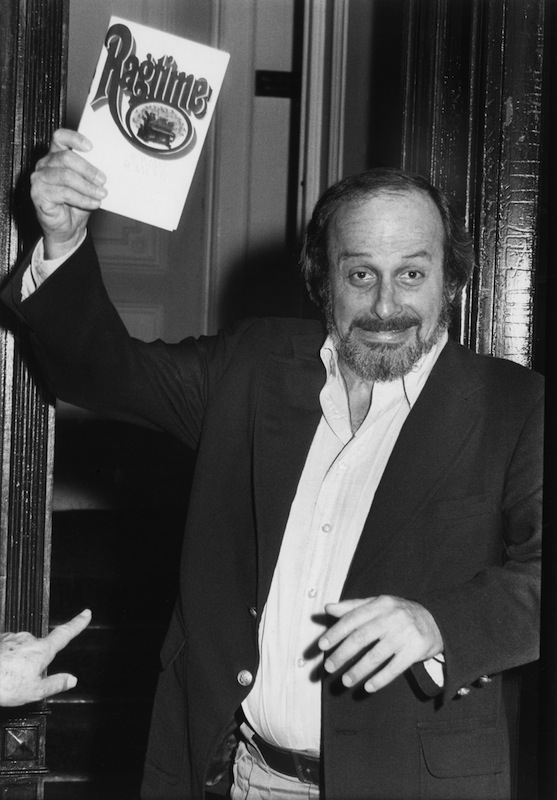
Ragtime: A Novel for Today

E. L. Doctorow’s novel Ragtime, first published in 1975, remains one of the major novels of the twentieth century. It is one of the few novels I have read in a single twenty-four-hour period. If you haven’t read it, the time is now.

The main plot (just one of many interwoven plots) was what happened with a black musician, Coalhouse Walker. He tried to be a responsible citizen, but when an Irish fire brigade in New York trapped him and destroyed his car, and when no justice was forthcoming to make restitution for the car, Walker took the law into his own hands. The event that pushed Coalhouse over the edge was when his fiancée tried to confront the Vice President with the injustice done to Walker, and secret service agents beat her to death. The climax event was when Coalhouse committed a major act of domestic terrorism.

Clearly, every reader understands that Walker’s act of terrorism was completely out of proportion to the wrongs that he suffered.  But it is equally clear that he would not have done any of his crimes had he not been goaded into it by the systematic and severe racism that pervaded New York City at that time. The message is clear: people of all races need to be treated with dignity. If they are not, someone might lash out with major acts of destruction. The point is not to assign blame, but to prevent these deadly situations from occurring in the first place.

The parallel situation today is very clear. Minorities in America, including but not limited to blacks, are being treated very badly. Their response, such as destructive riots, has been much greater than the narrowly-defined wrongs done to them. The acts of violence that minorities are committing in America today are often property crimes, but are understandable. When you treat minorities with systematic abuse, their over-reaction is easily predictable. It is as if Doctorow’s novel is being played out today before our eyes; just substitute George Floyd in place of Coalhouse Walker’s fiancée.

What amazes me is the restraint that minorities have shown in response to the abuses against them. If a black terrorist were today to do what the fictional Coalhouse Walker did, it would not be surprising at all; modern black activists have been nicer than one could reasonably expect any group of humans to be under the circumstances.

If minorities were to rise up against the white oppressors, it would be wrong, but us white people (or, in my case, mostly-white) are just asking for it. Minorities must be very nice people to not react as Coalhouse Walker did in the novel.

Doctorow masterfully wove together story lines of many characters, as if he were Tolstoy only much more interesting. I almost felt as if I was reading a history book by James Burke, in which all possible connections were made. Pierpont Morgan, Henry Ford, Emma Goldman, Harry Houdini, Sigmund Freud, and Booker T. Washington are just a few of the characters. The characters were, when named, usually real; the fictional characters were identified with names such as Father or Tateh or Mother’s Younger Brother. The one exception is the main character, a black musician named Coalhouse Walker, who as far as I can tell is invented. Many of the major events were real, for example, when Evelyn Nesbit’s husband shot her former lover on the rooftop of Madison Square Garden in 1906. Of course, Doctorow invented the ways in which the characters came in contact, such as Evelyn Nesbit taking care of the daughter of a poor Jewish artist who later became a major filmmaker. Doctorow probes the what-if of the inner lives of the characters: for example, what if Evelyn Nesbit was really a philanthropist? The situations were real; for example, in the first decade of the twentieth century, there really was a strong socialist movement in America.

The climax scene, a standoff between Coalhouse Walker and Booker T. Washington, was fictitious but perfect. Two very different approaches to solving the problems of race relations stood in conflict with one another: Coalhouse Walker advocating violence, and Booker T. Washington insisting that black people earn the respect of whites. Since Washington’s time, black people have shown themselves the equals of everyone else. However, white racists still refuse to respect them. Washington would have been extremely disappointed to see the continued racism in our society today.

Doctorow used several techniques that most modern writers consider to be forbidden. For example, he would insert intrusive sentences about how the events look to us today, long after the events, introducing a jarring break from the time line of the story. But this didn’t matter to me as I read. Some of the characters, such as Houdini, played roles that were entirely unnecessary for the plot of the novel, and a modern editor would have insisted that Houdini’s story line be removed from the novel. A more serious problem for a modern novelist is that the main character did not enter the novel until chapter 21 on page 178. I would just say that beginning novelists such as myself should not try things that Doctorow got away with. Ragtime is a masterpiece despite things of which, 45 years later, editors and agents disapprove. I enjoyed them, however.

If you haven’t read Ragtime, now is the time to do it!


Thursday, July 9, 2020


A lawyer famously asked Jesus, “Who is my neighbor?” Just as famously, Jesus did not answer the question directly but told a story. Don’t you just love that?

In Oklahoma, during racial tensions and the pandemic, I wonder just how many “neighbors” there are. Rather than simple neighborliness, we have either one extreme or the other.

  • First, there are the bad neighbors, who are neighbors only in the sense of physical proximity. They are otherwise full of hatred toward their fellowman. Here in Oklahoma, especially in the rural town where I work (in contrast with Tulsa, where my family lives), a lot of people in the immediate neighborhood do everything they can to make themselves bad neighbors. Loud music is common. And twice, people have used my yard as a place over which to shoot their fireworks. They let their dogs run free and bite people (two of my colleagues, not yet me), they throw their garbage everywhere, in their own yards and everyone else’s. They make themselves as obnoxious as possible.
  • Second, there are the good neighbors. But we cannot just relax and be neighbors. My wife and I were out walking and we met one of our neighbors, a black man who was cleaning up branches from his yard. We could have just been neighborly and said Good Morning, but it was the day of the Trump rally and racial tensions in Tulsa, so we felt an obligation to create small talk with him, which we all enjoyed. Those of us who are not part of the problem have to use every opportunity we can to promote the solution, in this case interracial friendship. We cannot just take neighborliness for granted. Altruism is so rare that it might die if we do not actively feed it.


Repeatedly on radio interviews, black people say that they are afraid that white police will shoot them even if they try to be nice to them and cooperate. They feel all white guns pointed at them, and they do not take a single day of life for granted. They fear that, each day they get out of the house, they might get shot. This is a horrible burden to have to bear. Are they overreacting? Actually, the chance of a black person getting shot by a white policeman is very small—but still much larger than the chances a white person faces. After what they have been through, a little overreaction is understandable. I cannot lecture them and say, You probably won’t get shot, so just calm down. My responsibility is to contribute to a solution.

I remember back to a time, not long ago in our neighborhood, when you could just treat everyone the same. But today, under Trump’s leadership of perceived hatred, good white people have to notice which of their neighbors are black and make special efforts to befriend them. People like us are the ones that will keep America from descending into racial chaos.

Saturday, June 20, 2020

A Kind of Republican You Will No Longer Find: Example 1

On the day that I am posting this, Donald Trump is visiting Tulsa for his first big rally leading up to the 2020 Election. VP Mike Pence is going to wander around Greenwood, the district in Tulsa where, 99 years ago, whites massacred blacks and destroyed one of the most prosperous black communities in the United States. Pence, an evangelical Christian, is going to meditate on how wonderful a peacemaker and reconciler Trump is, and how all black people should love Him no matter what He says or does. Thus far, as of two hours ago, no violence has erupted, despite the expectations of the white racists that blacks would massacre white people or at least destroy their businesses. Al Sharpton spoke at a rally last night, but the associated demonstrations were peaceful and positive—a Juneteenth celebration of black progress, rather than a violent blast against ongoing white racism. I will keep you posted about what happens next.


(Photo from Radio KWGS website)

There are many moderate Republicans who are ashamed of Trump, but Trump is such a powerful voice of hatred that these moderate Republicans maintain their silence and fall in line behind Him.

But this has not always been the case. There was a time when the Republican Party was not as full of hatred as it is today. I have fond memories of Republicans who, even though I now believe they were wrong, were constructive. I will share their stories with you in the next two essays.

When I was in fifth grade, it became abundantly clear to me that I needed glasses. The teacher wrote test questions on the board for us to answer, and I could not read them, nor would the teacher allow me to approach the board. A straight-A student, I was a little upset, though my final grade was hardly affected by it.

I got my glasses in sixth grade. The optometrist who examined me and prescribed them was James O. Miller of Exeter, California. I almost immediately revered him. He was a practitioner, not a scientist, but he found all aspects of science fascinating. He got most of it from a little magazine, The Griffith Observer, published by the Griffith Observatory, to which Miller was drawn by his interest in optics. Dr. Miller explained everything to me, even though I was just a little kid. He drew a diagram to show me what caused my nearsightedness (the focus from the lens was not on the retina). In a larger measure than I probably realize, he set me on the path of becoming a scientist.


Dr. Miller was a staunch Republican back in the days when Richard Nixon was running for president and Ronald Reagan was governor of California. One of my eye checkup appointments was during the 1968 Republican convention. He had the radio on in his office, and his assistant, as instructed, told him who the VP nominee was. He had never heard of Spiro Agnew. (Have you?) Miller was also what we would today call a Quiverfull Christian. He had so many kids that they had their own basketball team. I am not making this up. He joined bus trips to Sacramento to lobby for conservative causes. I was on one of those buses with him.

But his Christian views would be almost unrecognizable by modern evangelicals. Like Loren Wilkinson in a previous essay, Dr. Miller considered everything in the natural world to be joyous evidence of God and something that Christians should protect and cherish. Most modern evangelicals consider the Gaia Hypothesis to be paganism, but when Dr. Miller told me about it, he said, “I never saw such clear evidence of God in my life.” Christians like Miller are now rare, or at least obscure.

James Miller died of a sudden heart attack while he was jogging. He was enjoying health and nature until the last moment.

Saturday, June 17, 2017

Why I Do Not Plan to Talk with Global Warming Denialists

This essay is an expansion of the one I published today in my science blog.

I live and work in Oklahoma, the hotbed of creationism and climate change denialism. I feel like I am a missionary in a hostile tribe just because I accept scientific evidence. I am, for the most part, personally reclusive about my knowledge of evolution and climate change. I, of course, am quite clear about them when I teach and write, but I seldom engage in discussion about them with people who disagree. The only neighbors who know my views are those who have first declared their similar views to me.

I tell everybody I can about botany, the science of plants. But the reason I seldom speak in person about the sciences of evolution and global warming is that I will almost certainly experience personal attack if I do. Today, I joined in with other activists at an information table outside a farmer’s market to tell people about global warming. This is something I have not done before and probably will not do again. Most of the people who went by were supportive, to varying degrees. This is something you might expect from the visitors to a farmer’s market. But there was one climate change denialist who decided to subject me to a barrage of lies and tried to make me feel like I was a force of darkness and repression.

Okay, I started it. A man and his wife and baby were leaving the farmer’s market. Our information table was not within the market itself, but in the lawn of a nearby church that had specifically invited us to be there. I spoke first. I said, “Thank you for coming to the Farmer’s Market. By doing so, you have helped to reduce your carbon emissions, because you have bought local produce that has not been trucked across the country for thousands of miles.” I thought this was a positive thing to say.

But this was when the man decided to launch his attack. He said that there has been no global warming for the last ten years. I told him that my own research has clearly demonstrated global warming over the last twelve years. (I will present some of my data in another essay.) He simply said that I was lying and had made all of my data up.

But he did not stop there. He said that the government must have paid me thousands of dollars to do my research, and that I was being paid to say that global warming was occurring. I told him that I had done my research entirely for free. I would have told him that I gathered my data about budburst dates in deciduous trees by simply writing them down almost every day for two months each of twelve years, something that required no money. But I didn’t have a chance to do this. He just called me a liar again.

Next he said that Barack Obama was an evil man, a liar, and a hypocrite because of all the fuel that he burned in Air Force One to go to Paris to sign the climate agreement. Of course, when Trump uses a lot of jet fuel to fly to his personal vacation resorts at taxpayer expense, it is just fine. According to an AP report by Chad Day, published last month, “Flying Trump to Mar-a-Lago on Air Force One twice cost at least $1.2 million.” The report continues, "...documents made public Thursday by Judicial Watch are some of the first to put even part of a price tag on Trump's frequent visits to his Palm Beach, Florida, club. The numbers reflect only the costs associated with the president's plane, Air Force One. Not included are expenses for Secret Service protection or support vehicles provided by the Department of Defense, which must be airlifted into place." This is just fine, according to Oklahoma Republicans, but Obama flying to Paris to sign the climate agreement was evil.

Why did the man criticize Obama flying in Air Force one? The key was that the man called Obama a hypocrite. You see, the reasoning seems to go like this. Democrats say that burning unnecessary jet fuel is bad for the climate. Republicans, however, say that they can burn all the jet fuel they want for any reason whatsoever. Therefore, if a Democrat ever burns any jet fuel at all, it is hypocrisy. For Republicans, however, it is not, since they say it is not a problem. This is like a thief saying that it is okay for him to steal money, but not okay for a person who disapproves of theft to do so.

So the only time a denialist will so much as listen to someone who disagrees with him or her is if that person lives in a hovel and is not responsible for any carbon emissions. Well, I don't quite live in a hovel, but I am very frugal in my energy use. I didn't get a chance to tell him this, but if I had, I imagine he would have called me a liar, just as he did regarding my research.

The man's final attack was to say that environmentalists wanted to keep Africans poor and diseased and miserable because we want them to not have any electricity, any at all. This is, of course, not true, but I didn't have a chance to say this. Another person who was with me started to say it, but the man refused to listen to it. We tried to tell him that locally-generated solar and wind energy makes electricity more accessible to rural African villages than would building billion-dollar power-plants, precisely because it would save the expense of thousands of miles of transmission lines from point of production to point of use.

I did get a last few words in to the wife with the kid. She told me she came to the market for safe food. I said that, even though we disagree, she was part of the solution to the climate problem. What she was doing was good for more reasons than she had known. I think she might have been inclined to agree with me on that one point—I sensed a distinct lessening of tension—but I think she did not want her husband to see her agreeing with me about anything.

There are some evolution and climate change denialists who are reasonable people, not necessarily in their approach to the information but at least in their approach to me. There are denialists who will not call me an evil liar. But they are rare enough that I think I will just stay away from any personal discussions on these subjects.

I think it is about time for this old missionary to retire. At some point, it is time to move to some place in which one is not constantly in fear of personal attack. France looks like a pretty good place, especially since the new prime minister has specifically invited climate scientists such as myself to move there. As explained above, if you accept science in Oklahoma you are subjected to the same kind of verbal attacks as black people were throughout the South in the pre-civil-rights era. If I had been black in the 1950’s and France had invited me to come, I would have taken the invitation very seriously.


The reason I include this essay in a religion blog is that the denialists, like the creationists, are inspired by religious fervor. They worship Trump and the Republican Party. Their response to anyone who disagrees with them about anything (not just these issues but all others) is the same as a medieval Inquisitor reacting to someone he declared to be a heretic. To them, creationism and global-warming-denialism are the only essential parts of Christianity. I really do feel like a missionary who is about to be beheaded. I feel like a black man about to be lynched in the early twentieth century. I need to live in a secular society, and soon.

Monday, September 26, 2016

White Pride

I think white people have a lot to be proud of. They can drive loud fuming pickup trucks around like nobody’s business. And they are pretty straight shooters, especially when they have dark targets. All of this takes nerves of steel and muscles of meat.

But here’s what I don’t understand. Why is it that so many white people feel inadequate in their own self-image unless they can degrade people of other races? Can’t whites just be proud of being white without shooting blacks or releasing dogs to attack Native American children? Why can’t white people just thank their white God that they are white, without having to carry out acts of degradation against other races?


There’s nothing wrong with white pride, or black pride, or Native pride, so long as people do not degrade members of other ethnicities.

Saturday, August 20, 2016

Some Political Insights from Literature: Carson McCullers

I recently read The Heart is a Lonely Hunter by Carson McCullers. It contained some passages that help us understand the political frustration that progressives feel today. I merely quote these passages for your appreciation.

One of the passages was spoken by Jake Blount the communist. His feelings reflect the frustration of millions of low-wage workers today who dare not speak out against their oppression:

‘And look what has happened to our freedom. The men who fought the American Revolution were no more like these D. A. R. dames than I’m a pot-bellied, perfumed Pekingese dog. They meant what they said about freedom. They fought a real revolution. They fought so that this could be a country where every man could be free and equal. Huh! And that meant every man was equal in the sight of Nature—with an equal chance. That didn’t mean that twenty per cent of the people were free to rob the other eighty per cent of the means to live. This didn’t mean for one rich man to sweat the piss out of ten thousand poor men so that he can get richer. This didn’t mean the tyrants were free to get this country in such a fix that millions of people are ready to do anything—cheat, lie, or whack off their right arm—just to work for three squares and a flop. They have made the word freedom a blasphemy. You hear me? They have made the word freedom stink like a skunk to all who know.’

Another passage was spoken by the black doctor Benedict Copeland, who was giving a sermon to poor blacks gathered at his house for a funeral:


‘Land, clay, timber—those things are called natural resources. Man does not make these natural resources—man only develops them and uses them for work. Therefore should any one person or group of persons own these things? Can a man own ground and space and sunlight and rain for crops? How can a man say “this is mine” about those things and refuse to let others share them? Therefore Marx says that these natural resources should belong to everyone, not divided into little pieces but used by all the people according to their ability to work…Say a man died and left his mule to his four sons. The sons would not wish to cut up the mule into four parts and each take his share. They would own and work the mule together. This is the way Marx says all of the natural resources should be owned—not by one group of rich people but by all the workers in the world as a whole.


‘We in this room have no private properties…All that we own is our bodies. And we sell our bodies every day we live. We sell them when we go out in the morning to our jobs and when we labor all the day. We are forced to sell at any price, at any time, for any purpose. We are forced to sell our bodies so that we can eat and live. And the price which is given us for this is only enough so that we will have the strength to labor longer for the profits of others. Today we are not put up on the platforms and sold at the courthouse square, but we are forced to sell our strength, our time, our souls during almost every hour that we live. We have been freed from one kind of slavery only to be delivered into another. Is this freedom? Are we yet free men?...

‘And we are not alone in this slavery. There are millions of others throughout the world, of all colors and races and creeds. This we must remember. There are many of our people who hate the poor of the white race, and they hate us. The people in this town living by the river who work in the mills. People who are almost as much in need as we are ourselves. This hatred is a great evil, and no good can ever come from it. We must remember the words of Karl Marx and see the truth according to his teachings. The injustice of need must bring us all together and not separate us. We must remember that we all make the things on this earth of value because of our labor.’

Monday, August 15, 2016

Race as Shorthand, Not as Reality

It has always been impossible to define race. Most humans who have ever lived have had characteristics that were recognizable for their race, although nobody could ever figure out how many races there were. For example, are subsaharan Africans all one race? Bantu people (e.g. Nigeria) look very different from Ethiopians and San (e.g. from Namibia).

But in many societies the dominant people found it extremely important to define race with an exactitude that the concept will not allow. This was particularly true for people of mixed ancestry, as many of us are. This resulted in such absurdities as the one-drop rule in pre-Civil-War America, in which “one drop of black blood” made you black, and if your mother was a slave, you were a slave, even if you were only (like the children of Sally Hemings) one-eighth black. The former Apartheid leaders of South Africa struggled with this concept so much that, in their pitiful final days of rulership, they had to define people from India as honorary whites. No more needs to be added to this, other than that if you have not read Mark Twain’s Pudd’nhead Wilson (a slave and a master, who were both one-eighth black, were switched in the nursery), you should.

Still, look around you, and you will find that race is a useful shorthand for identifying people. Even the bluest of liberals cannot avoid it. And, for me, seeing all the different races helps me to rejoice in human diversity, more so than I would if I (perhaps more accurately) saw each person as unique. On the trams of Strasbourg, I enjoyed seeing Muslims and Jews, each in distinctive garb, mixing with saffron-robed Buddhist priests.

But many people want to make each race a category of blame. The most obvious modern example of this is that millions of conservatives consider all Muslims to deserve blame for the terrorist actions of a small number of them. The solution to terrorism, they believe, is to keep all Muslims out of America. By which they mean, all people Arabic ethnicity. (I’m not sure what they would do with red-headed white Muslims from Turkey or the former Yugoslavia.)

But I’m here to tell you, from personal experience, how evil this is. I am of partial Cherokee ancestry. My sixth great grandmother was Nancy Ward, the famous peace activist of the Cherokee Nation prior to the Trail of Tears. Her cousin, Tsiyu Gansini, was the last holdout of Cherokee warriors, whose Chickamauga warriors did not surrender until 1794 on Lookout Mountain, Tennessee. Tsiyu Gansini and his warriors committed numerous atrocities, and Nancy Ward could not stop them. Nancy Ward said “My cry is all for peace,” while Tsiyu Gansini said, “We are not yet conquered.” Today we would call the Chickamauga warriors terrorists.

And yet the United States considered all Cherokees to be guilty of the Chickamauga terrorism. In 1830, Andrew Jackson signed the Indian Removal Act, and all Cherokees, not just terrorists (of whom none remained by that time) were forced out of their homeland by the United States Army in 1838. Even though the Cherokees by that time had their own written language, newspaper, constitution, Supreme Court, and they lived in white-man houses and had white-man agriculture,
the United States still considered them savages and took their land. It was the category of “Cherokee” that allowed the government to hold all members of the category responsible for the terrorist acts of a few.

When I think about the really nice Muslims I have known, including the couple who struck up a really friendly conversation with us on the tram in Strasbourg, I know none of them approved of Islamist terrorism, any more than my ancestor Nancy Ward approved of the terrorist acts of her cousin, Tsiyu Gansini.


I posted the foregoing on my science blog.